
Eric Chen
I am a second-year PhD student at Carnegie Mellon University, where I am fortunate to be advised by Kathryn Roeder and Martin Zhang.
My research interests lie broadly at the intersection of biomedical data science and machine learning. By bridging ideas across causality, generative modeling, and representation learning, I hope to uncover fundamental insights into complex systems, from human biology to artificial intelligence.
To this end, I develop principled models that are:
- Mechanistic, uncovering true mechanisms rather than spurious correlations.
- Interpretable, so practitioners can understand and trust their conclusions.
- Generalizable, staying robust beyond training conditions, where data is scarce.

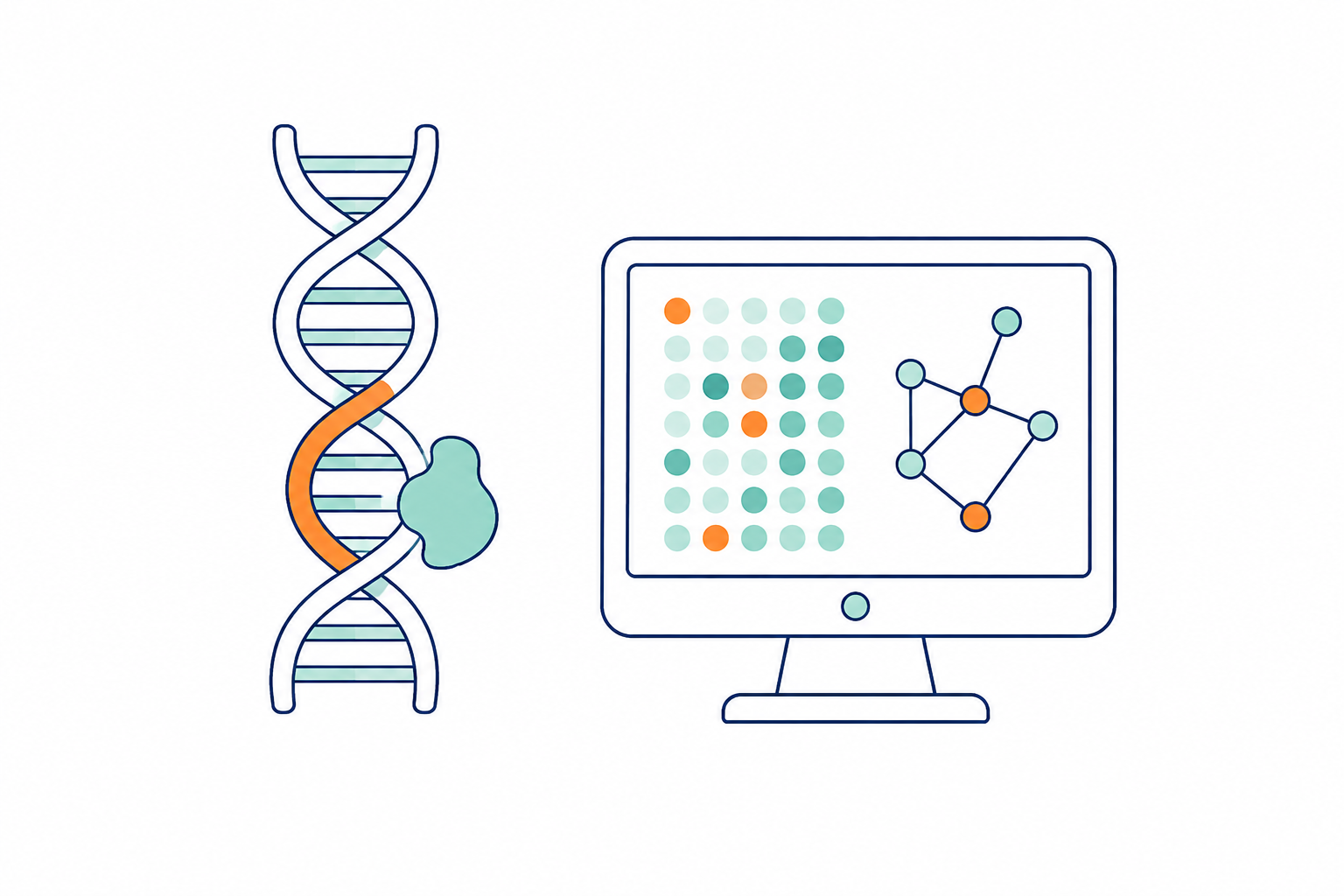
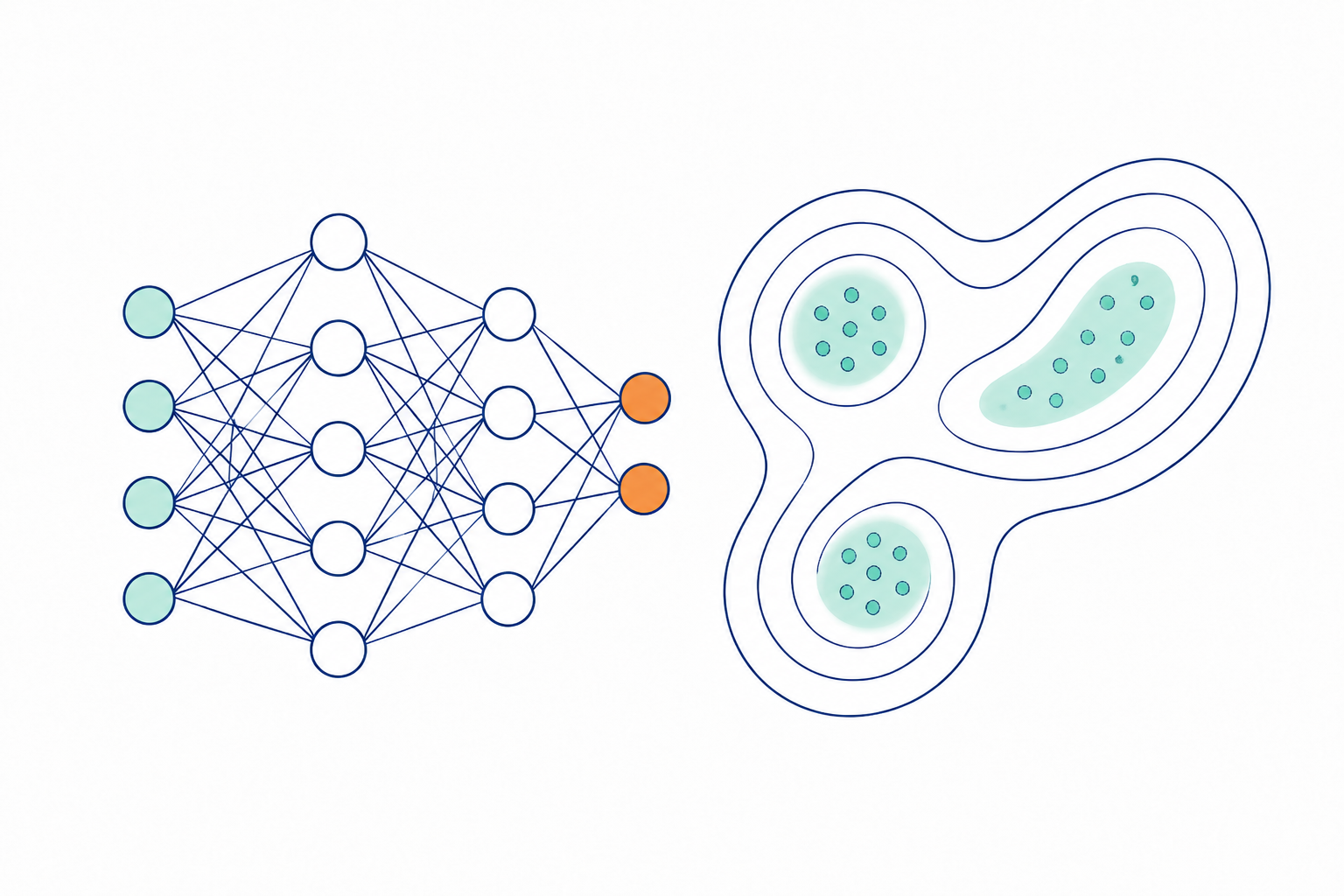
AI for Science
automated discovery · biomolecular design · foundation models
Computational Biology
functional genomics · multi-omic integration · virtual cell models
Machine Learning
deep learning · generative modeling · reinforcement learning
News
- Sep 2026Our paper on sketching metadifferentiation for predictive data attribution is on arXiv.
- Aug 2026I am co-organizing the CMU Statistics & Machine Learning Reading Group for the 2026–27 academic year.
- Mar 2026Our paper clarifying the relationship between double machine learning and influence functions is on arXiv.
Publications
2026
Data Attribution via Sketched MetadifferentiationAbstractPDF
Data attribution seeks to quantify how individual training examples shape a model's predictions and underpins problems including data valuation, machine unlearning, and model interpretability. Despite having a long line of work, computationally scalable methods often struggle to predict the effect of removing training data in neural networks due to their non-convex nature. To overcome this challenge, metagradient-based methods such as MAGIC (Ilyas and Engstrom, 2025) differentiate each prediction through the entire training run and compute its exact influence with respect to the training data, but require a separate run for every prediction. To reduce this cost, we cast budgeted attribution as estimating a large influence matrix from a small number of measurements. We show that the measurements most appropriate for recovering this matrix differ from those best suited for attribution itself. We then present two algorithms, MAGE and SPELL, suited for reconstruction and attribution respectively, that run on existing metagradient machinery at no extra cost. Empirical studies demonstrate strong performance over existing baselines across training scales and measurement budgets.
2026
It has been frequently observed that Neyman orthogonality, the central device underlying double/debiased machine learning (Chernozhukov et al., 2018), and pathwise differentiability, a cornerstone concept from semiparametric theory, often lead to the same debiased estimators in practice. Despite the widespread adoption of both ideas, the precise nature of this equivalence has remained elusive, with the two concepts having been developed in largely separate traditions. In this work, we revisit the semiparametric framework of van der Laan and Robins (2003) and identify an implicit regularity assumption on the relationship between target and nuisance parameters -- a local product structure -- that allows us to establish a formal equivalence between Neyman orthogonality and pathwise differentiability. We also show that the two directions of this equivalence impose fundamentally different structural requirements. Finally, we illustrate the theory through three detailed examples of estimating the average treatment effect and expected density in a nonparametric model, as well as the slope in a partially linear model. This helps clarify the relationship between these two foundational frameworks and provides a useful reference for practitioners working at their intersection.
2025
Top-k Feature Importance RankingAbstractPDF
Accurate ranking of important features is a fundamental challenge in interpretable machine learning with critical applications in scientific discovery and decision-making. Unlike feature selection and feature importance, the specific problem of ranking important features has received considerably less attention. We introduce RAMPART (Ranked Attributions with MiniPatches And Recursive Trimming), a framework that utilizes any existing feature importance measure in a novel algorithm specifically tailored for ranking the top-k features. Our approach combines an adaptive sequential halving strategy that progressively focuses computational resources on promising features with an efficient ensembling technique using both observation and feature subsampling. Unlike existing methods that convert importance scores to ranks as post-processing, our framework explicitly optimizes for ranking accuracy. We provide theoretical guarantees showing that RAMPART achieves the correct top-k ranking with high probability under mild conditions, and demonstrate through extensive simulation studies that RAMPART consistently outperforms popular feature importance methods, concluding with two high-dimensional genomics case studies.
2025
Unrolled networks have emerged as one of the most successful methods in imaging applications. Although they have demonstrated remarkable efficacy in solving specific computer vision and computational imaging tasks, their adaptation to other applications presents considerable challenges. This is primarily due to the multitude of design decisions that practitioners working on new applications must navigate, each potentially affecting the network's overall performance. These decisions include selecting the optimization algorithm to unroll, defining the loss function, deciding on the structure of residual connections, and determining the number of convolutional layers, among others. Compounding the issue, evaluating each design choice requires time-consuming simulations to train the neural network. As a result, the process of exploring multiple options and identifying the optimal configuration becomes time-consuming and computationally demanding. The main objectives of this paper are (1) to unify some ideas and methodologies used in unrolled networks to reduce the number of design choices a user has to make, and (2) to report a comprehensive numerical study to discover the optimal design choices. We anticipate that this study will help scientists and engineers design unrolled networks for their applications and diagnose problems within their networks efficiently.
2025
Comprehensive Examination of Unrolled Networks for Solving Linear Inverse ProblemsAbstractPDF
Unrolled networks have become prevalent in various computer vision and imaging tasks. Although they have demonstrated remarkable efficacy in solving specific computer vision and computational imaging tasks, their adaptation to other applications presents considerable challenges. This is primarily due to the multitude of design decisions that practitioners working on new applications must navigate, each potentially affecting the network's overall performance. These decisions include selecting the optimization algorithm, defining the loss function, and determining the deep architecture, among others. Compounding the issue, evaluating each design choice requires time-consuming simulations to train, fine-tune the neural network, and optimize its performance. As a result, the process of exploring multiple options and identifying the optimal configuration becomes time-consuming and computationally demanding. The main objectives of this paper are (1) to unify some ideas and methodologies used in unrolled networks to reduce the number of design choices a user has to make, and (2) to report a comprehensive ablation study to discuss the impact of each of the choices involved in designing unrolled networks and present practical recommendations based on our findings. We anticipate that this study will help scientists and engineers to design unrolled networks for their applications and diagnose problems within their networks efficiently.
2024
Joint Optimization of Multiple Resources for Distributed Service Deployment in Satellite Edge Computing NetworksAbstractPDF
With the emergence of mobile edge applications and the demand for access-as-a-service, satellite mobile edge computing stands out as a disruptive technology for delivering low-latency edge service. In this article, we focus on service deployment to the edge satellites for terrestrial users, which is a key enabling technology in satellite mobile edge computing and will replace traditional centralized cloud computing. Most existing works on service deployment consider a centralized nonconvex optimization problem with high computational overhead. However, in practice, it is difficult for a single satellite to solve computationally expensive network optimization problems. To this end, we propose a distributed optimization model based on the alternating direction method of multipliers (ADMMs), which can relieve the computational burden by leveraging collaborative calculations among multiple satellites. Our proposed model minimizes the total delay of service deployment for terrestrial users by formulating a joint optimization problem that involves deployment decisions, CPU resource decisions, transmission decisions, and caching decisions. Furthermore, we propose a novel approximation method that transforms the nonconvex optimization problem to a convex one to make the joint optimization problem solvable in polynomial time. Finally, we conduct experiments using scaled global population data and show that the proposed distributed model outperforms the baselines.
Teaching
Carnegie Mellon UniversityTeaching Assistant
-
Introduction to Probability TheoryFall2026
This course provides an introduction to probability theory and stochastic processes and is intended for students in mathematics, science, engineering, and social sciences. Topics include elementary probability theory, conditional probability and independence, random variables, distribution functions, joint and conditional distributions, limit theorems, and an introduction to random processes.
-
Simulation Methods in Option PricingSpring2026
This course initially presents standard topics in simulation including random variable generation, statistical analysis of simulation output and variance reduction methods including antithetic variables, control variables, importance sampling, conditional Monte Carlo, stratification and martingale control variables.
-
Financial Time Series AnalysisSpring2026Spring 2026
This course is an introduction to financial time series analysis. We will cover basic time series models (AR, MA, ARMA and ARIMA) and their use in financial applications, including forecasting and the development of quantitative trading strategies.
-
Modern RegressionFall2025
This course is an introduction to applied data analysis using linear regression modeling. We will derive properties about those models, apply and examine various models for real datasets, assess the validity of modeling assumptions, and determine what conclusions we can make (if any) from those models.
Miscellaneous
Academic Tree
This is my academic family tree, which traces back to some of the greatest mathematicians of Early Modern Europe. Hover over any name to see the scholar's institution and dissertation.
Data from the Mathematics Genealogy Project.
Doctoral advisors and their academic lineages:
- Kathryn Roeder → Bruce Lindsay → Norman Breslow → Bradley Efron → Rupert Miller → Samuel Karlin → Salomon Bochner → Erhard Schmidt → David Hilbert. A second branch off Lindsay reaches Hilbert in three steps instead of six, through Ronald Pyke, Z. W. Birnbaum and Hugo Steinhaus. Below Hilbert the line splits again and rejoins at Abraham Kästner: one branch through Ferdinand Lindemann, Felix Klein, Julius Plücker, Christian Gerling, Carl Friedrich Gauss and Johann Pfaff, the other through Heinrich Weber, Otto Hesse, Carl Jacobi, Enno Dirksen and Bernhard Thibaut. From Kästner it runs through Christian Hausen, Johann Wichmannshausen and Otto Mencke to Jakob Thomasius and Friedrich Leibniz. A third branch leaves Felix Klein by his other advisor, Rudolf Lipschitz, and crosses into Martin Zhang's lineage: Lipschitz → Gustav Lejeune Dirichlet → Siméon Denis Poisson and Joseph Fourier, which rejoin Zhang's line at Poisson and at Joseph-Louis Lagrange respectively.
- Martin Zhang → David Tse → Robert Gallager → Peter Elias → … → Siméon Poisson → Lagrange and Laplace → Euler and the Bernoullis, and d'Alembert and Varignon → Nicolas Malebranche → Gottfried Wilhelm Leibniz, and on to Jakob Thomasius and Friedrich Leibniz. It meets Kathryn Roeder's lineage twice: high up at Poisson and Lagrange, where her Lipschitz branch joins it, and again at the foot of the tree at Jakob Thomasius. Thomasius was the doctoral teacher of Gottfried Wilhelm Leibniz, and Friedrich Leibniz was Gottfried's father.
Comics
The GoalpostsSep 2026

The SynonymsSep 2026